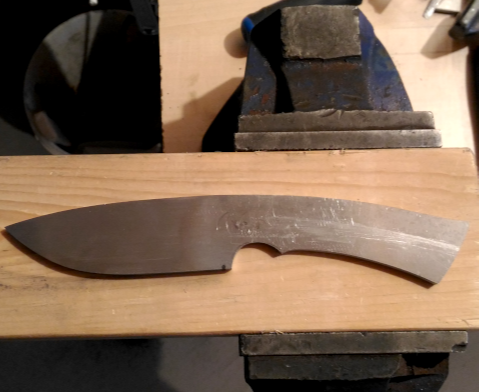
Stock Removal, a later-developed blade-making method, shapes a blade by precisely cutting, grinding, or filing away material from a solid piece of metal, unlike the earlier forging technique, which relied on heating and hammering metal to form and strengthen the blade.
The Stock Removal method is a blade-making technique where a knife is shaped by removing material from a solid piece of metal rather than forging it. In this method, a flat bar or blank of steel—often high-carbon—is gradually ground, filed, or machined to achieve the desired blade shape, thickness, and edge. The process allows precise control over the blade’s geometry, making it popular among custom knife makers.
Historically, forging—heating and hammering metal into shape—predates stock removal. While forging alters the steel’s internal grain structure for added strength, stock removal became favored for its efficiency and ability to produce consistent, detailed blades without heavy industrial equipment. The modern stock removal technique owes much of its development to advancements in grinding tools and abrasives during the 19th and 20th centuries.
Today, most high-quality knives—from kitchen knives to tactical blades—are made using stock removal, often combined with heat treatment to optimize hardness and durability.
1. The Forging Method ("The Manipulative Way")
Forging is the ancient art of heating steel in a forge and using a hammer and anvil to "move" the metal into the desired shape.
The Philosophy: It is an additive and transformative process. You start with a raw hunk of steel (often a round bar or a thick slab) and use heat to make it plastic.
Design Freedom: Forging allows for integral designs, where the blade, bolster (the hand guard), and tang are all one solid piece of metal. It is also the only way to create Damascus steel (pattern-welding).
Material Efficiency: Very little steel is wasted. If you need a wider blade, you simply hammer the steel thinner and wider.
Best For: Traditional Bowies, ornate daggers, and "primitive" style knives.
2. The Stock Removal Method ("The Subtractive Way")
Stock removal is like carving a statue. You start with a precision-rolled flat bar of high-quality steel and remove everything that isn't a knife.
The Philosophy: It is a scientific and engineering-focused process. It relies on high-speed belt grinders and precision templates.
Technical Consistency: Because it starts with a factory-perfect bar, the maker has absolute control over the geometry. This is why Bob Loveless could produce identical models with perfect balance every time.
Modern Steel Compatibility: High-performance stainless steels (like S30V or 154CM) are notoriously difficult to forge but respond beautifully to precision grinding.
Best For: Modern hunting knives, tactical folders, and high-end culinary knives.